What Do Wind Turbines Do in a Storm?
In short: Classically, a wind turbine shuts down at around 25 m/s wind speed (cut-out). Modern turbines use storm control: instead of shutting down abruptly, they progressively pitch the rotor blades out of the wind and keep producing electricity at reduced rotor speed and power. Sources: Windmesse, BWE.
The classic storm shutdown (cut-out)
- From around 25 m/s mean wind speed (≈ 90 km/h, Beaufort 10) the turbine reaches its design limit.
- The pitch control turns the rotor blades out of the wind, the rotor slows down and stops.
- The generator is disconnected from the grid, the mechanical brake secures the rotor.
- The turbine stands still until the wind drops below ~22 m/s for a certain period (hysteresis prevents constant on/off cycling).
Modern storm control
Instead of an abrupt standstill, modern turbines ramp power down gently from around 22–25 m/s — the pitch control turns the blades gradually, the rotor speed drops, the generator keeps delivering, but at lower power. Advantages:
- More yield in storm conditions (instead of 0 kW).
- Gentler load changes on the turbine — less material stress.
- Grid stability during a storm front, because the feed-in does not drop away all at once.
This control approach is state of the art today on large onshore and offshore turbines from leading manufacturers.
Who decides the shutdown threshold?
The manufacturer sets the exact cut-out speed as part of IEC 61400 certification, documents it in the turbine certificate, and tunes it to the specific turbine type and rotor diameter. It is therefore not a regulatory requirement but a technical design value derived from rotor diameter, tower strength and gearbox design. Operations management (usually a remote monitoring centre) receives the turbine's wind measurement data in real time via SCADA systems and only steps in if the automatic control itself does not react as scheduled — under normal operation, storm shutdown or storm control runs fully automatically, without human involvement.
The difference between gusts and mean wind speed
A common misunderstanding: the 25 m/s threshold refers to the wind speed averaged over several minutes, not to individual gusts. Short gust peaks of 30 or 35 m/s do not automatically trigger a shutdown as long as the average stays below it — the turbine's control system smooths the readings to avoid constantly ramping up and down in gusty weather. Only once the rolling average exceeds the threshold over a defined period (usually 10 minutes) does the shutdown logic kick in, automatically and without delay. This explains why turbines often keep running in strongly gusty but on-average moderate wind, while they shut down earlier in a steady, strong storm.
What happens mechanically
- Pitch control: each rotor blade can be turned independently about its longitudinal axis (pitch angle) to "shed" or "catch" the wind.
- Yaw drive: the entire nacelle can rotate about the tower axis to align the rotor optimally into the wind — or deliberately turn it out of the wind.
- Structural reserves: turbines are designed to IEC classes for defined extreme winds (e.g. Class I for ≥ 50 m/s peak gust).
What storm events mean for yield
Storms are not a loss-making proposition for a turbine's annual yield — quite the opposite. The power curve of modern turbines typically reaches rated output already at 12–14 m/s and holds it up to the storm-control threshold. The few hours per year in which a turbine is actually fully shut down make up only a very small share of its annual full-load hours and are factored into the yield forecast as standard. Stormy autumn and winter months, in total, usually deliver markedly above-average yield, because sustained high mean wind speeds over long stretches far outweigh the brief shutdown losses.
Frequently asked questions
What if the storm overwhelms the turbine anyway?
Turbines are designed for the 50-year wind events of their IEC class — see Turbine Classes. Realistically, a turbine in the highest classes is exposed to extreme winds several times over its lifetime without taking damage.
Can individual turbines be damaged by lightning?
Yes, lightning strikes are more common than storm damage. Turbines therefore have integrated lightning protection concepts (receptors at the blade tip, earthing). Repairs of individual rotor blades are standard.
What happens during a power grid outage in a storm?
If the grid is lost, modern turbines can use the pitch control to bring themselves safely to a standstill — the backup energy for the pitch drive comes from buffer batteries in the nacelle. This self-sufficient emergency function is a core part of the safety design and is specifically tested and documented during every certification.
Do turbines automatically ramp back up after every storm event?
Generally yes, and without a technician needing to intervene on site. Once the rolling average of wind speed drops back below the restart threshold and stays stable there for a few minutes, the control system automatically brings the turbine back online. Manual intervention is only needed if there is a fault report — for example a sensor error or a safety-relevant deviation that has to be checked before restart.
Are older turbines more at risk in storms than new ones?
Not fundamentally, provided they are properly maintained, regularly inspected, and their original IEC classification is not exceeded by site changes or altered wind conditions. But as turbines age, maintenance matters more: fatigue cracks in rotor blades or gearbox components, of the kind detected through structural stability reports and regular inspections, can reduce load capacity over time. This is one reason why, after around 20 years of operation, the question of continued operation or repowering becomes practically relevant.
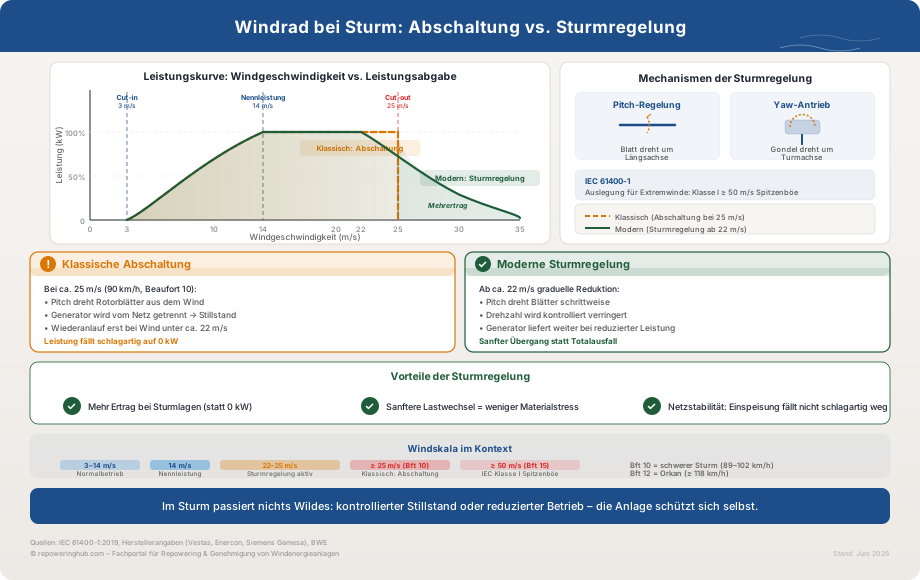
Wind turbine in a storm – shutdown vs. storm control, power curve and mechanisms