How Much Lease Does a Wind Turbine Pay?
In short: A lease of 4-7% of electricity revenue is typical — for a modern turbine, roughly EUR 20,000 to over 100,000 per year depending on the site. Over a 20-30-year term, that adds up to a seven-figure sum per turbine. The exact amount depends on the wind, the electricity price and the negotiated model.
The common lease models
| Model | How it works |
|---|---|
| Revenue lease (standard) | fixed percentage (usually 4-7%) of annual electricity revenue |
| Minimum lease + share | guaranteed base amount, plus a percentage share above it |
| Fixed lease per MW / per turbine | agreed euro amount, often index-linked |
| Land pool / distribution | all owners in the wind farm share the total lease according to their land share — even without a turbine on their own plot |
The pool model is fairer and on the rise: neighbours whose land only carries "just" access roads, cable routes or setback zones are also compensated. This avoids disputes within the village.
What determines the lease amount
- Wind resource: more full-load hours = more yield = more lease. The biggest lever.
- Electricity price / remuneration: secured via the EEG market premium or a PPA.
- Turbine size: a 6-MW turbine produces a multiple of an old 1.5-MW turbine — see electricity yield.
- Negotiating position: land in designated priority areas (Vorranggebiete) is in demand, which strengthens the owner's hand.
How lease payments work in practice
Most contracts provide for annual billing: the operator discloses actual electricity generation and the revenue achieved (from the EEG market premium or a PPA), and the agreed percentage is calculated and paid out from that. An advance payment during the year with a final settlement once revenue records are submitted is common. For the landowner this means: the lease fluctuates with the wind year — in an above-average wind year it comes out higher than in a weak one. An agreed minimum lease caps this downside risk.
Land under the turbine vs. land within the wind farm
A common misconception: lease is paid only for the land actually sealed under the tower and foundation. In practice, contracts usually distinguish between several land categories:
- Turbine site: foundation, crane pad, access track — the highest lease per square metre, since it is permanently occupied.
- Ancillary areas: cable routes, access roads to other turbines — lower lease, since used only temporarily or underground.
- Setback areas with no structural use: compensated proportionally under the pool model, even though nothing is built on the land itself.
Anyone who owns land within a wind farm should therefore check carefully which category applies in the specific draft contract — it significantly affects the amount of income.
Repowering: the lease rises significantly
Anyone who already has an old turbine on their land benefits especially from repowering: the new turbine produces 2-3 times as much, and the revenue-based lease rises accordingly. The repowering yield calculator provides a rough income estimate based on the expected additional yield.
What first consultations often underestimate
Many landowners sign the developer's first contract draft without having a benchmark to compare it against. Before signing, it is worth checking three things. First, how the percentage is precisely defined — whether it applies to gross revenue or to a net revenue after costs, which can noticeably change the payout. Second, whether a revision clause exists for market changes (e.g. EEG amendments or falling PPA prices). Third, how the term interlocks with the operator's possible extension options — long option periods without additional consideration for the owner are a warning sign.
Frequently asked questions
Should I bring in an independent advisor before signing the contract?
Yes, that is standard practice given contract terms of 20 to 30 years and sums in the six- to seven-figure range. Lawyers specialising in agricultural or energy law, plus specialised experts, typically review the percentage definition, the indexation clause, the decommissioning security, the notice periods and the repowering provision in detail. This review usually costs only a small fraction of the total lease sum expected over the term, but it can uncover unfavourable or one-sided clauses early and avoid later disputes.
Do I have to pay tax on the lease?
Yes. Income from leasing land for wind energy is taxable; depending on the arrangement, as income from renting/leasing or as business income. This should be clarified in advance with a tax advisor — we do not provide tax advice.
Do I receive a lease even if the turbine is not on my land?
Under the pool model, yes — via the land share (access roads, setback areas, cable routes). Whether a pool exists depends on the project and is a matter of negotiation.
Does the municipality benefit too?
Yes. Under § 6 EEG, operators can give municipalities a flat-rate share of the revenue, and trade tax (Gewerbesteuer) is also payable. More on this in the guide Citizen participation.
What happens to the lease if the turbine stands still?
With a purely revenue-based lease, the payment falls during periods of reduced yield — for example during shutdowns due to shadow flicker, species protection or grid congestion. This is exactly why experienced landowners negotiate a minimum lease: it ensures that even in a year with an above-average number of shutdown hours, a base amount stays guaranteed regardless of the actual electricity yield.
Can I renegotiate the lease contract later as the landowner?
Generally only at the points provided for in the contract — for example on contract extension or as part of a repowering, when a new contract or an adjustment is due anyway. Within the base term, lease contracts are usually binding and cannot be unilaterally renegotiated. That makes careful review of the clauses before the first signature all the more important, especially on repowering, indexation and termination rights.
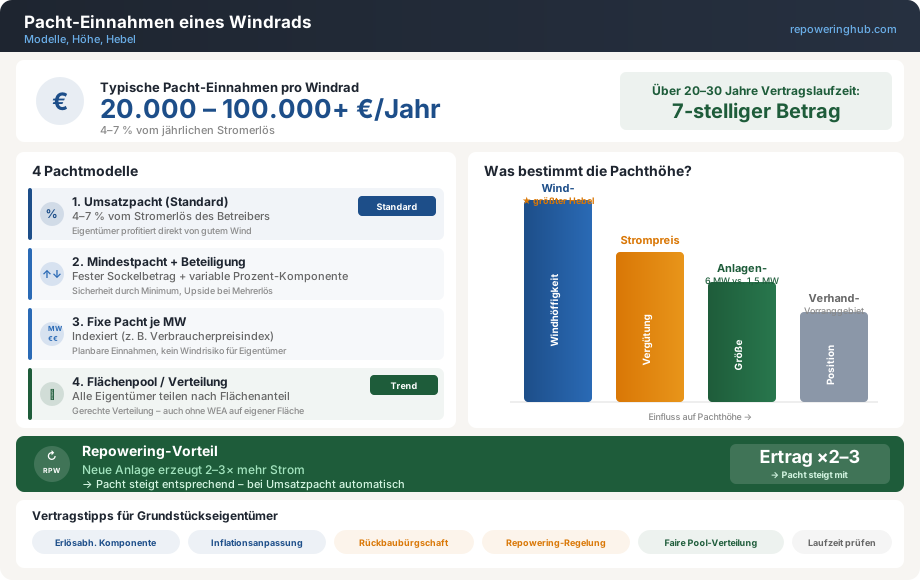
Lease income of a wind turbine – models, amounts, levers and contract tips